


[ad_1]
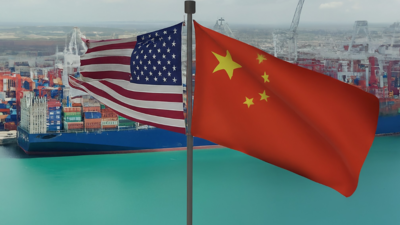
On Wednesday, China referred to a renewed willingness to participate in trade negotiations with the United States, announcing that “the door for talks wide open” amid continuous tariff tensions.
The statement follows the recent comments issued by US President Donald Trump, which hinted that the comprehensive definitions of Chinese imports – which reach 145 percent – can be dramatically reduced once there is a trade agreement. The definitions, which were presented during the second period of Trump, escalated a long -term trade war between the two world powers.
Speaking at a regular press conference, Chinese Foreign Ministry spokesman Qah Jiakon reported that Beijing’s preference for dialogue on the confrontation. “We do not want to fight, nor are we afraid of fighting,” he said. “If necessary, we will fight to the end. But the door of talks is wide open.”
Also read: Definitions “multilateral and global economic system”, China says
Qoh also issued an accurate warning to Washington, with a warning that expressing interest in negotiation with the maximum pressure at one time would be inversely. “One cannot ask for cooperation while resorting to coercion,” he said.
Notes with markets remain ready amid fears that economic hostilities between the United States and China continues to deepen global financial instability. Nevertheless, Beijing’s message appears to confirm the strategic openness to cancel the escalation-its own conditions.
China’s data comes while Trump revealed earlier his intentions to reduce the customs tariffs on China. He spoke from the Oval Office on Tuesday, he told the correspondents that the tariff rate of 145 percent “will significantly decrease.” He said: “145 percent is very high, and it will not be high. No, it will not be anywhere near this high. It will come down significantly. But it will not be zero – it is used to be scratch. We just destroyed. China was taking us to ride.He added: “We will be very nice, we will be very nice, and we will see what is happening. But in the end, they have to make a deal because they will not be able to deal in the United States.”
Trump’s tone followed Liwa as a warning from Treasury Secretary Scott Bessin, who was said to have told the investors at the JP Morgan Forum that the commercial confrontation “cannot be defended” and “no one believes the current current situation is sustainable.”
The trade conflict resulted in an American tariff of 145 percent on Chinese imports, as China responds by 125 percent to American goods. Some items, such as smartphones and semi -conductors, are exempt, but a 20 % blanket tariff is linked to fentanel concerns.
While the official talks did not start, the White House press secretary Caroline Levit said that more than 100 countries are interested in new commercial deals after the Trump’s global tariff – although China is not one of them yet. She insisted that the administration is “the stage of the stage” for a future deal and “well works” on trade.
The markets responded positively, as American stock indicators rose more than 2 % after Bess’s comments, indicating that investors hope to reduce tensions.
Also read: The end of the trade war between the United States of China? Trump now says that the customs tariff for China will come down significantly. “


