

[ad_1]
Tapachula, Mexico (AP) – Anna Esquivel is no longer felt her heart race every time she watches a police officer.
“We have been told that they will not bother us or offend our treatment here, but at home, if a name mentioned appears on your identity, you may end up in detention overnight,” said a 50 -year -old transgender woman, who fled Cuba of fear of her safety and reached Mexico earlier this year.
Esquivel settled in the southern city of Tapachula, hoping to avoid the Trump administration’s harsh policies and eventually reach the United States. But unlike many who have returned after canceling their border patrol dates, returning home is not an option for LGBTQ immigrants.
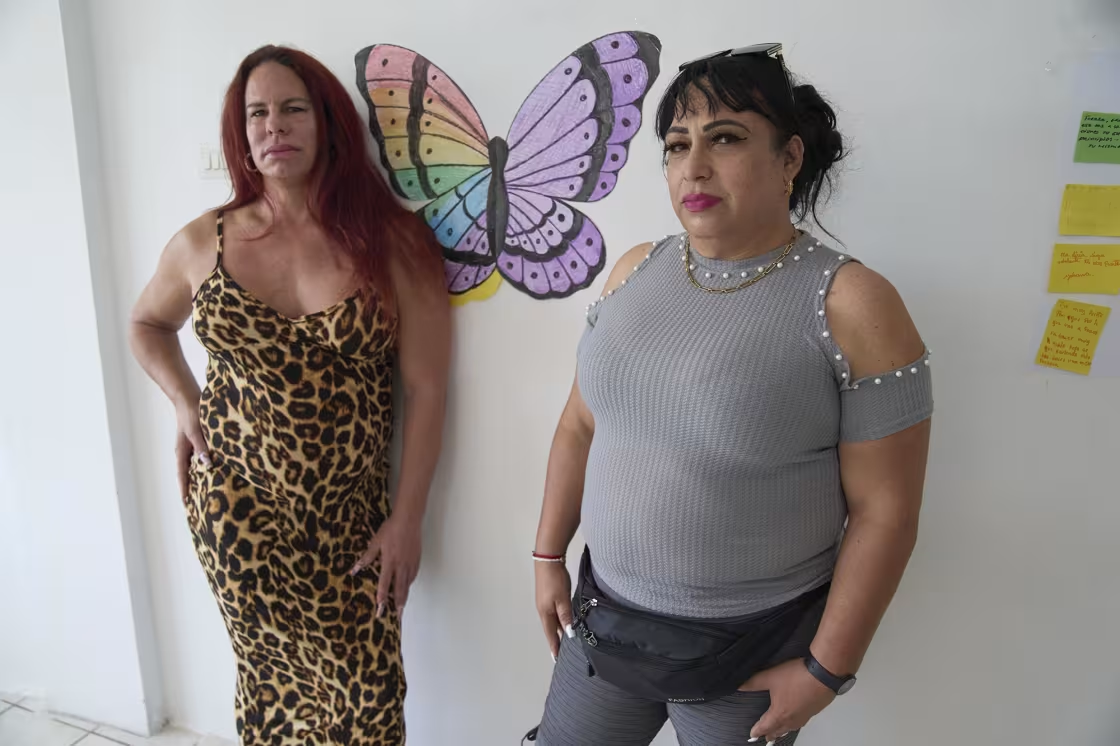
“The gay residents do not always leave their countries for the same reasons for others,” said Mariana de la Cruz, director of operations at Casa Frida, a shelter who supports LGBTQ immigrants who lost 60 % of her financing after President Donald Trump ordered the suspension of foreign aid programs in January.
“They leave because of discrimination and violence because of their sexual identity,” explained de la Cruz. “It is not only about economic factors or American dream – they leave because they need to stay.”
The flow of migrants on the southern Mexican border slowed down with Guatemala after Trump announced plans to restrict refugees and asylum seekers, claiming that it is necessary to curb illegal entry and border crime. Although the Mexican Committee for Refugee Aid in Tabesola has not updated its public data since December 2024, the shift is clear.
Hundreds of migrants are no longer gathering in a public square, pending a response to their refugee requests. While the lines are still formed outside the committee’s headquarters, locals say the crowds have shrunk.
In a nearby Catholic shelter, official Herber Berdids said they hosted up to 1700 immigrants at one time, but now it is closer to 300, after the closure of one CBP, the American border app that facilitated legal entry.
“The change was great,” said Birdid. “By January 20, we had about 1,200 people, but as the application stopped working, many began to return to their countries of origin.”
On the other hand, requests for help in Casa Frida remained fixed.
“All the people we support were victims of violence,” said Sebastian Rodriguez, who works in the shelter. “They cannot return.”
Since the opening at Tapachula in 2022, Casa Frida employees have reviewed 80 applications on average per month, focusing on the most vulnerable. According to Rodriguez, non -bilateral and transgender immigrants are often vulnerable to attacks.
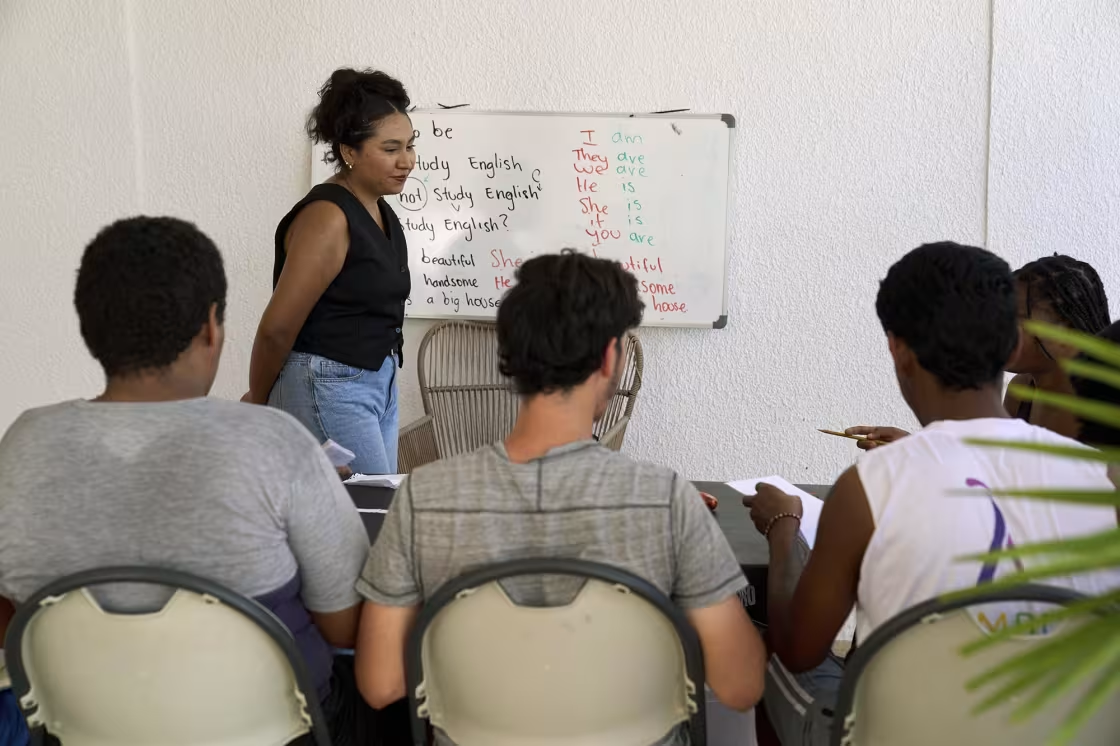
The shelter lacks the resources needed to help everyone, but they recognize about 70 new people every month and can support up to 200 LGBTQ members at any time.
Several immigrants recently participated with the Associated Press, which was kidnapped by the Cartile members when they entered Mexico and had to hand over their property in exchange for their release.
Rodriguez said that gay personnel face increased violence. The transgender women are often denied as men to avoid ridicule and target them by criminals. If they can reach a shelter, the employees put them in their male homes for safety. However, when they try to rent a room elsewhere, the angel is often undesirable or requesting exorbitant fees.
“For this reason, programs like our programs are essential,” Rodriguez explained.
The shelter estimates that about 40 % of its population was affected by the closure of the CBP One app and the extensive cancellation of appointments.
“Some people feel frustrated and despair,” said Rodriguez. “But many of them have applied for asylum in Mexico.”
CASA Frida offers shelter and meals for up to 12 people for three months. Other services for the organization help more immigrants by providing legal guidance on staying in Mexico, advice on finding comprehensive temporary jobs, providing psychological advice, and supporting a fair apartment rents.
“Most people think of us as a shelter, but providing a shelter is only the essence of what we do,” said Rodriguez. “Our goal is to help reintegrate the victims of violence into society.”
The shelter works in three sites: Mexico City, where it was founded in 2020 and primarily supports the local population; Tapachula, which mainly hosts immigrants from Cuba, Honduras, Venezuela, El Salvador, Peru and Haiti; Montere, where those who face severe risk are transferred to a safe and unknown address.
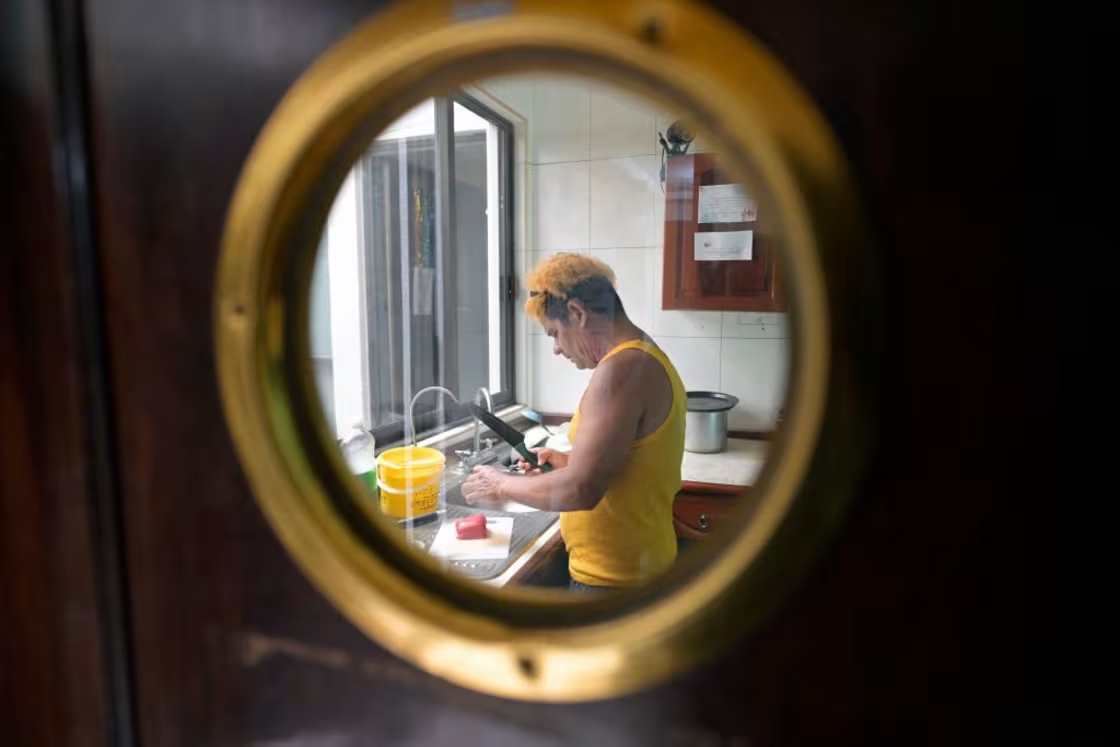
Manuel Jiminies, 21, arrived at the Mexico City shelter in February after leaving his mandate near the capital, where the harassment of family members became unbearable.
Initially, Jiménez was aimed at reaching the United States and traveling north in November 2024. His journey was running smoothly until it was detained by border border officers in Arizona and was deported. However, staying in his hometown was not safe for him.
“One of them told me about this shelter because I was looking for a place where I was peace,” said Jiminiz, who is known as the bisexual. “At home, there were people who wanted to harm me, verbally and physically.”
He now lives in Casa Frida, and he works in a nearby restaurant and hopes to save enough money to find its own place in the end.
In Tapachula, Esquivel submits an application for a Mexican refugee position. With 85 % of the Casa Frida applicants receiving a positive response, they are still optimistic. One day, you dream of returning to school, finding a job, and perhaps moving.
“I want to stay here and become part of this country,” said Esquivel. “I want to do it in the right way, and I am unique to my help to help me get there.”
Esquivel learned about the shelter from another transgender woman who fled from Cuba after being threatened by the police.
“I was almost arrested. In Cuba, we were subjected to discrimination and persecution. We leave in search of a better life,” said Rachel Perez, 51.
Human rights organizations have condemned the constant intolerance in Cuba, despite the country’s legal protection for sexual orientation and sexual identity.
Esquivel was accused of prostitution – which is illegal in Cuba – to walk alone at night. The police issued several warnings before being arrested and sent to a male prison.
“I was raped there,” said Esquivel, who was imprisoned for a year. “I was only 21 years old, and the prisoners worsened. Over time, I learned how to defend myself, but these were very difficult times that I will never forget.”
Casa Frida employees are constantly updating their protocols to help migrants such as Esquivel, but maintaining the shelter’s operation has become increasingly difficult due to US aid discounts. According to De La Cruz, notifications began to arrive by January 24, and a few weeks later, 60 % of their budget disappeared.
She said, “We have searched everywhere for the new sustainability options.” “We are part of a network that focuses on gay movement all over Latin America and Caribbean – 13 organizations in 10 countries – and at least 50 % of them have a blow.”
Funding campaigns and continuous conversations with European and local leaders may provide a solution, but the team is still concerned and they may have to expand the scope of rear operations significantly.
“Nothing has been placed in the stone, and we do not know what will happen after that,” said de la Cruz.


