

[ad_1]
BBC Scotland News

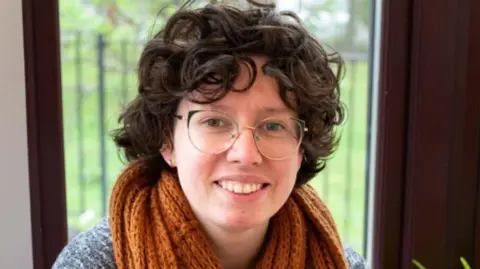 Jenny Watt
For Jenny Watt, death is an essential part of her life.
A 31 -year -old girl spends two or three nights per week chatting with people – whether she is familiar or strangers she met for the first time – about everything related to death, from work by sadness to the ideal song for a funeral.
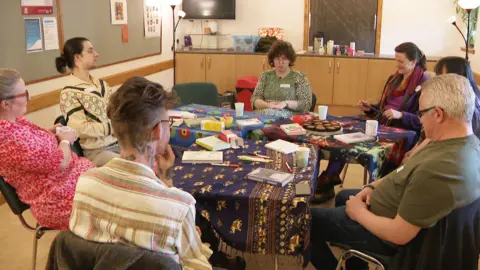
Jenny runs a handful of Death cafes Via Glasgow – the community spaces that aim to encourage conversation and discussion on a topic that a few people want to raise.
BBC Scotland News attended one of the weekly gatherings, which Jenny believes can help in breaking taboos on this topic.
But what makes a person want to spend time talking about the end of life?
Jenny estimates about half of those present in its groups there to address sadness in one way or another, whether for the last loss or 20 or 30 years.
“In the same way that people are called for nursing or religion, you are always interested in death,” she explained.
“It will happen to everyone. This may be unique to you and the relationships you are sad but if you feel it yourself, it may be a single experience.
“When you start talking about it, you realize that it is not very scary.”
Jenny first attended the online death cafe during the Koronverus virus in the pandemic, and noticed that she was not looking to work through any “shock to shock” – she was simply interested in the topic.
With the resumption of face -to -face meetings, they could not find any local groups that offer discussions about grief about Glasgow.
I took this diving, established its own meeting space about two and a half years ago in the Battle Square area in Glasgow, which led to no one appearing.
However, people – only sometimes, and others are more consistent – to get some tea and a bond of cake Discussing deaths and life.
“Nothing outside the borders”
At night, the BBC visited Scotland a genetic cafe, the attendees were a mixture of regular and first timing, which was attracted to the meeting for various reasons.
In addition to those with sadness, Jenny believes that 25 % or so will be people with serious condition or care for someone. The rest tends to be people who are simply interested in the subject.
“Whatever people want to talk about, nothing is outside the border,” says Jenny.
“People laugh, they will cry, and in the end I think everyone is learning something, whether it reflects their own experience or suddenly realize that they should get a power of attorney.”
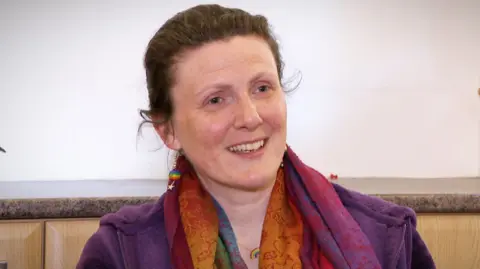
This feeling participates in Nicolas Smith, one of the most regular attendees in the battlefield meetings.
She came to one of the sessions on the same day when an intimate friend died of her, and “tears flow.”
But leaving her emotions flowing is not the only reason Nicolas continues.
“It is a fundamental part of our lives and living, however we are not talking about it,” she told BBC Scotland.
“We don’t know how to deal with it, because we do not do enough to talk about it. I lost very dear when my children were very young, and this was the first time that my daughter saw me crying.
“She asked me about a wet face, and it was time to explain that it is acceptable to cry and this is what happens when you lose someone you love. It is not weak, it’s not something that you adore.”
Nicolas added that she believes that the issue has become more taboo between modern generations because of The growth of the elderly Since the 1960s, this means a decrease in people who die at home.
These trends can be interpreted in Death – the first in the United Kingdom in 2011 in London, and Now there are 3794 throughout the United Kingdom.
In Scotland there are dozens, from ullapool to Kirkcudbright, but often they gather in cities like Glasgow and Edinburgh.
Discussion topics in meetings, from practical advice on the commandments and Power of Power, are more emotional reflections on personal experiences.
It is part of a broader conversation about loss and care, as represented by May Remove mystery from the death week This aims to help people support each other during painful experiences.
Another visitor in the Jenny Group, John Mcai, wrote a doctorate about death and mourning process. He was attending the first death cafe in Glasgow with the intention of discussing the topic more.
“There are such taboos about death, but you can take a lighter look at it,” he says.
“The problem is that people are not talking about it. If you see funerals from other cultures, this is very noisy and expressive, but in this country is very reserved.
“You have to make sure that you do not say the wrong thing and that you are wearing the right clothes – it will be good to reduce it too.”
Life perspective
Others suggest that the biggest benefit of the cafe is more simple – as it provides a life perspective.
Spencer Mason previously tried to end their lives, but he is currently dealing with the care of the end of life for a person close to them.
They say: “I think that the more we discuss death, the more you are more appreciated in life.”
“In the circumstances in which I became close to death, I got out of them wanting life more than ever.”


